Jewelry manufacturing in China vs India, compared
Two very different production bases. China is built for industrial volume; India, and Jaipur in particular, for handcraft, natural stones and small series. Here is how they compare, spec by spec — so you can choose for your collection.
Spec by spec
General tendencies, not rules: there are excellent small workshops in China and large factories in India. Use it to ask suppliers the right questions.
| Criterion | China | India Jaipur |
|---|---|---|
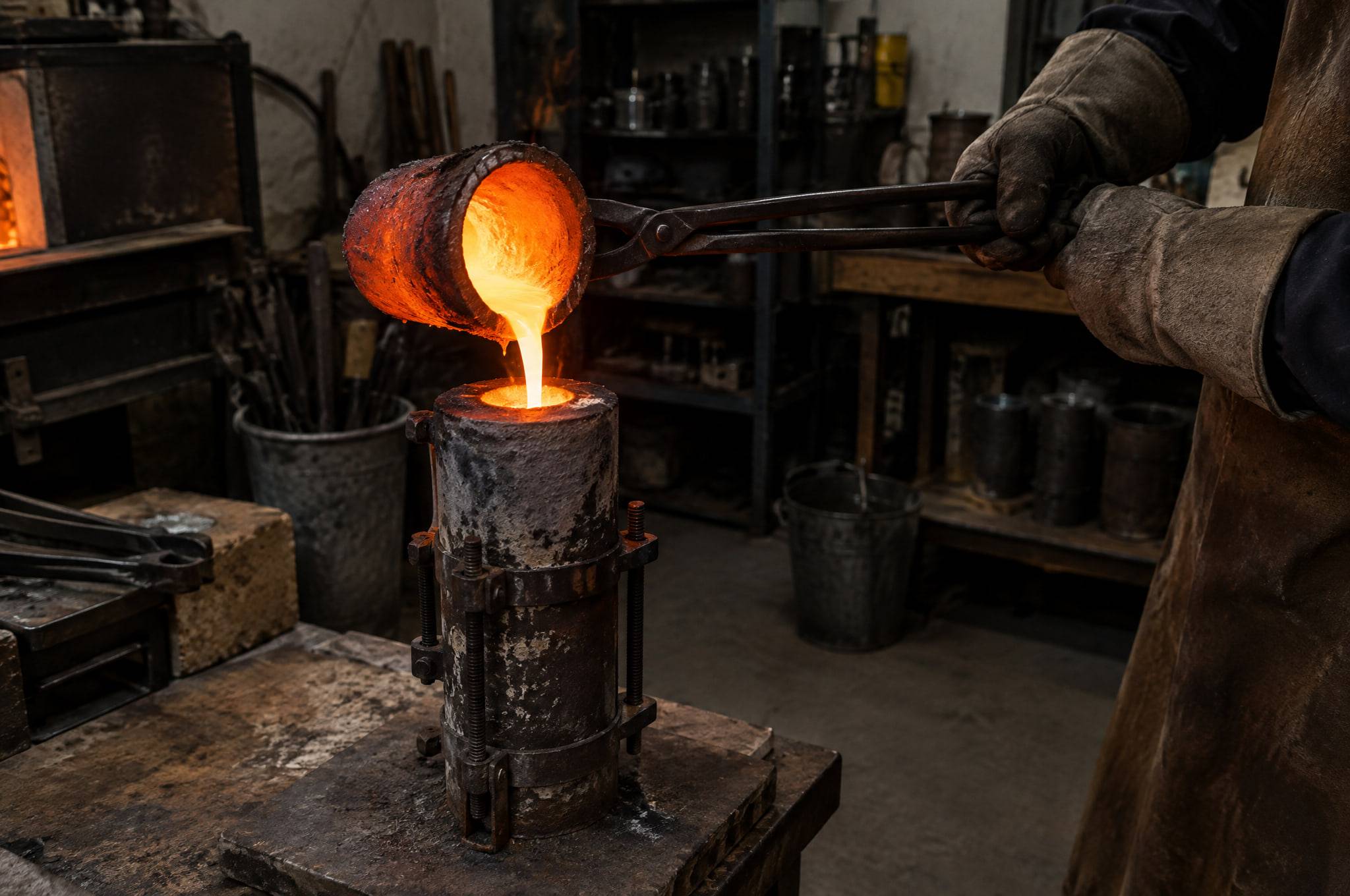
| Main strength | Industrial volume: die-casting, stamping, machine chains and automated plating lines, with very large supplier clusters. | Handcraft at small and medium scale: lost-wax casting, hand fabrication and hand finishing, in jewelry cities such as Jaipur. |
| Common base metals | Zinc alloy, stainless steel, brass, copper, sterling silver. | Brass, copper, sterling silver. Brass is the usual base for gold-plated fashion jewelry. |
| Typical run sizes | Factories are usually set up for large runs; minimums per design, and sometimes per color, tend to be high. | Small and medium runs are common. Our runs start at about 30 pieces per design, with a natural range of 30–100. |
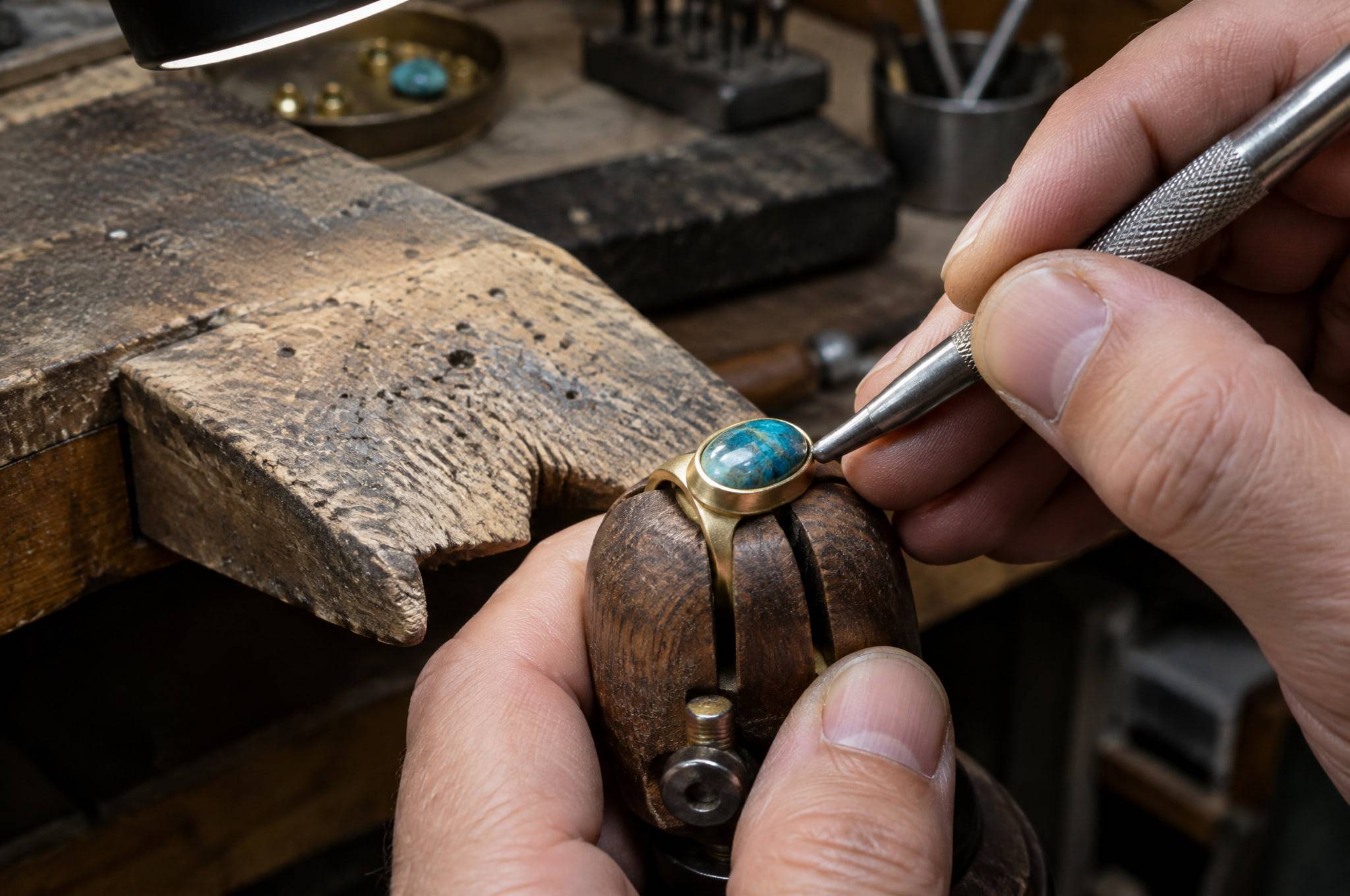
| Look of the piece | Very regular, machine-precise surfaces; ideal for identical, highly repeatable parts. | Hand-finished surfaces — hammered, brushed, sculpted — with the slight life of handwork. |
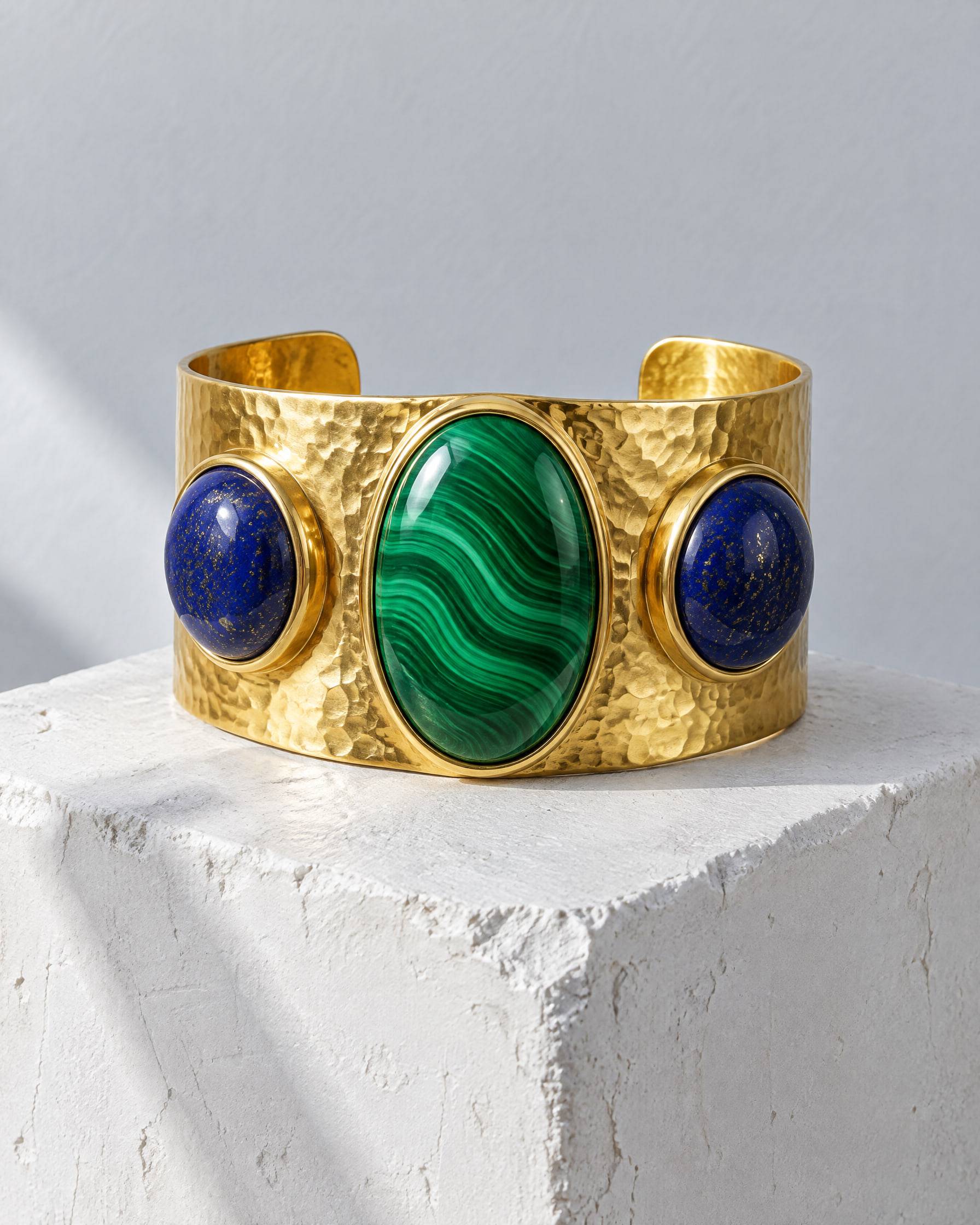
| Stones | Cubic zirconia, glass and synthetic stones are widely used at scale. | Jaipur is a historic center for cutting colored stones: natural semi-precious cabochons and faceted stones, cut and set locally. |
| Plating & coatings | Electroplating and PVD coatings are widely available, including PVD on stainless steel. | Gold electroplating on brass, to an agreed thickness and tone. Ask about other coatings: availability depends on the workshop. |
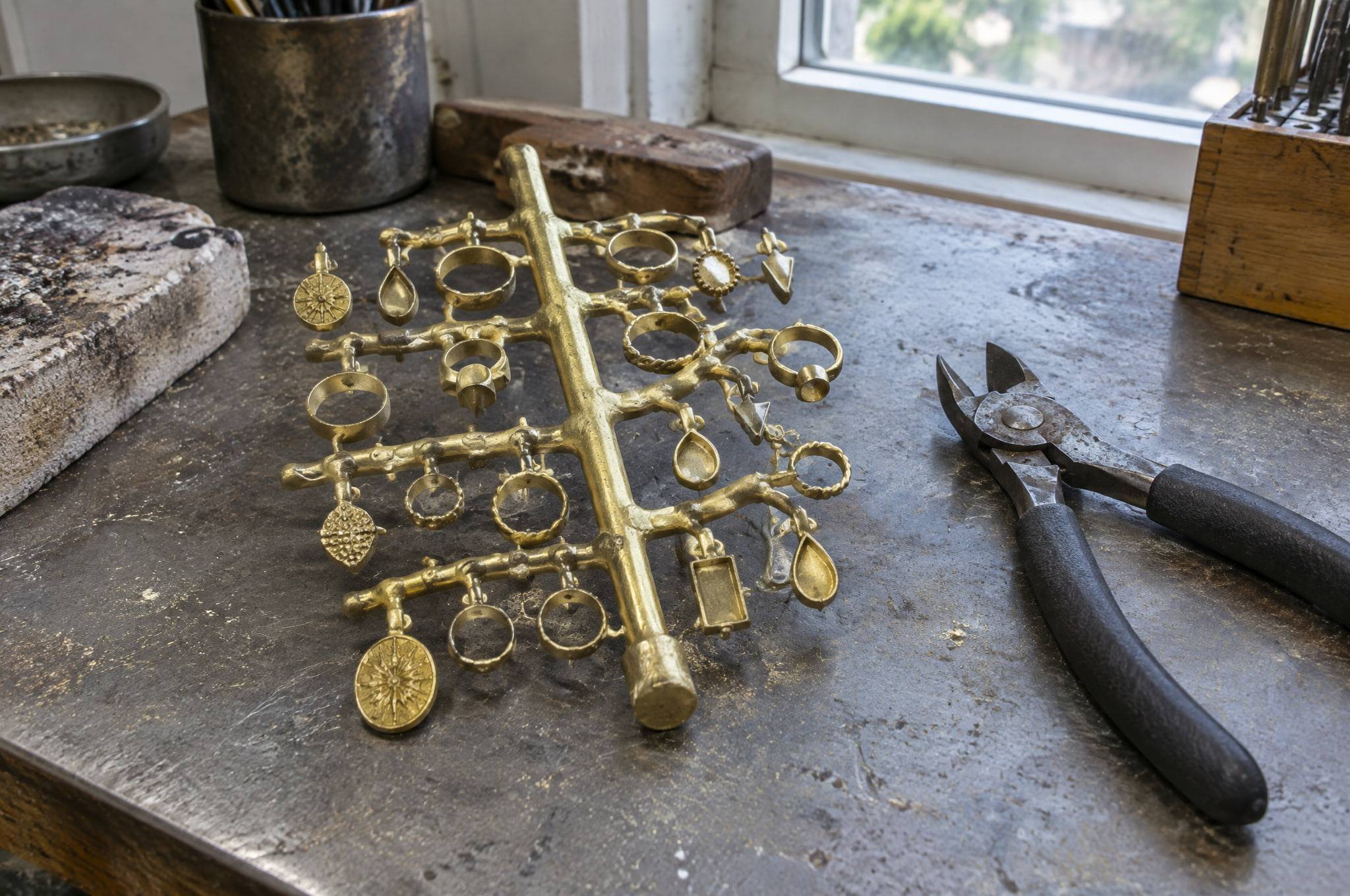
| Tooling & development | Steel molds and stamping dies favor long runs of the same design. | Wax models, rubber molds and handwork keep the cost of a new design low, which favors many designs in small runs. |
| Best suited to | High volumes of one design, very low unit cost targets, stainless steel and zinc alloy pieces. | Collections with many designs, hand-finished brass, statement pieces with natural stones, first and growing brands. |
How to choose
Choose an industrial factory when one design will sell in thousands, when the material is stainless steel or zinc alloy, or when the lowest unit price matters more than the number of designs.
Choose hand-based workshops when your collection has many designs in runs of tens to hundreds, when the surface should look hand-finished, or when you want natural stones cut and set where they are traded.
Many brands do both: core volume pieces in one place, statement and stone pieces in another. See how brass jewelry is made and our Jaipur workshops.
Questions about China and India
Is jewelry made in India cheaper than jewelry made in China?
It depends on the piece. China is often cheaper for very large runs of one design in zinc alloy or stainless steel. India is often more competitive for hand-finished brass and for collections with many designs in small runs, where tooling costs matter more than unit cost. The only reliable answer is a quote for your own designs.
Which is better for small jewelry collections?
Small runs — tens to a few hundred pieces per design — are where hand-based workshops such as those in Jaipur are usually more flexible, because a new design needs a wax model and a rubber mold rather than steel tooling.
What about import duties?
Duties on imitation jewelry depend on the country of origin, the destination and trade measures that change over time. Check the current rate for your products and market with your customs broker before choosing where to produce; we can provide the product details they need.
Do you also produce in China?
Our core production is in Jaipur, India, but we can also work with partner factories in China when a project calls for it — for example large runs of one design, stainless steel or zinc alloy pieces. We recommend the production base that suits each piece, and tell you where it is made before you order.
Keep exploring
Compare with a real quote
Send the collection you are planning — categories, number of designs, rough quantities. We tell you honestly which production base suits each piece, and why.
You can send sketches, reference photos, CAD files, a quantity per design and a finish.