Jewelry collection development, from sketch to sample
Bring sketches, references or a moodboard. We turn them into specifications and brass prototypes, and refine them with you until the sample is right — before any production commitment.
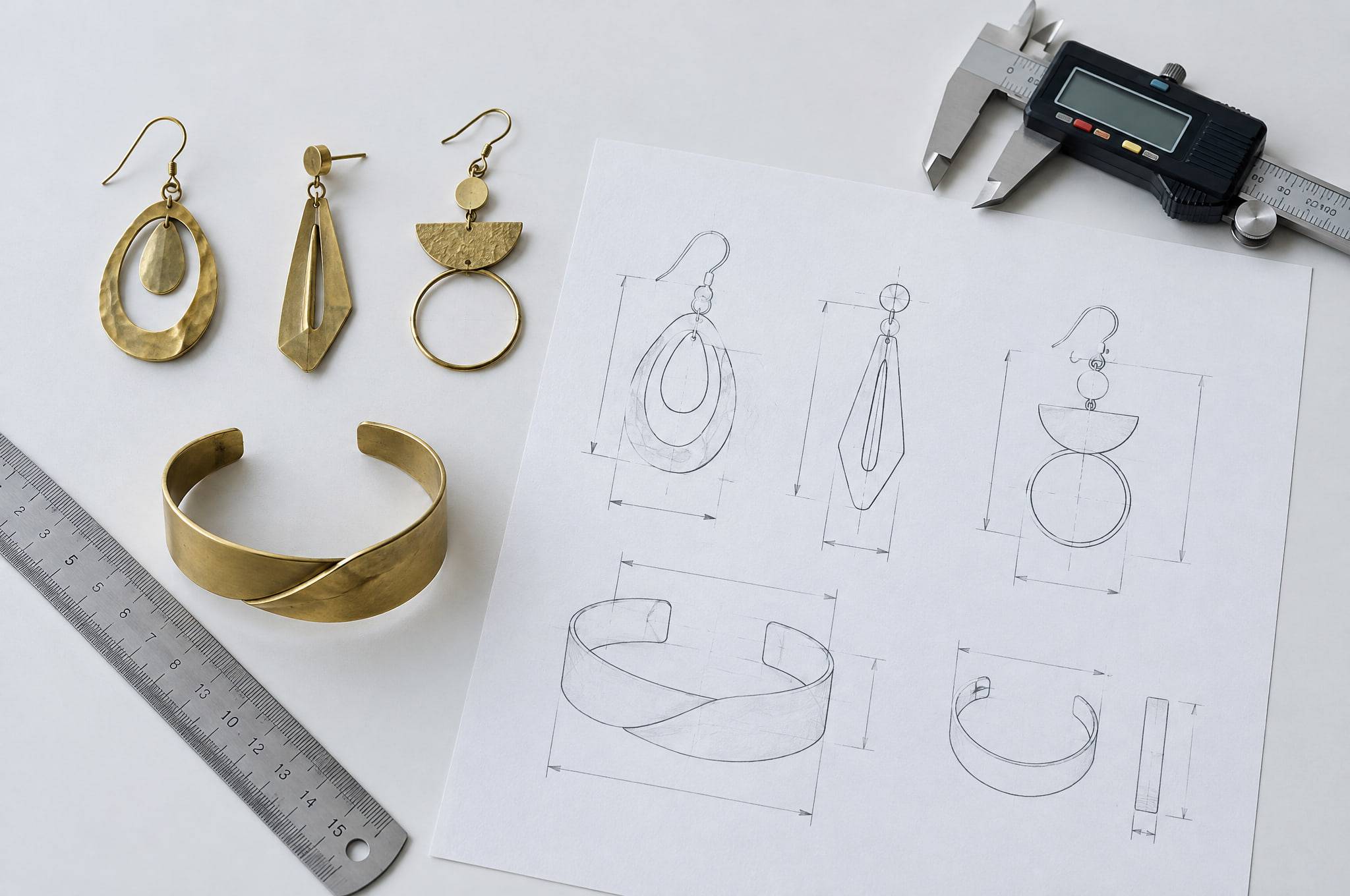
How an idea becomes a sample
Six stages, in this order. Some pieces go through revisions once, some several times; the stages stay the same.
-
Brief review
We read your sketches, references and constraints — price point, size, weight, finish, how the piece is worn — and come back with questions and a development quote.
-
Technical translation
Each design becomes something a workshop can build: dimensions, thicknesses, construction, findings, surface finish and plating.
-
Model making
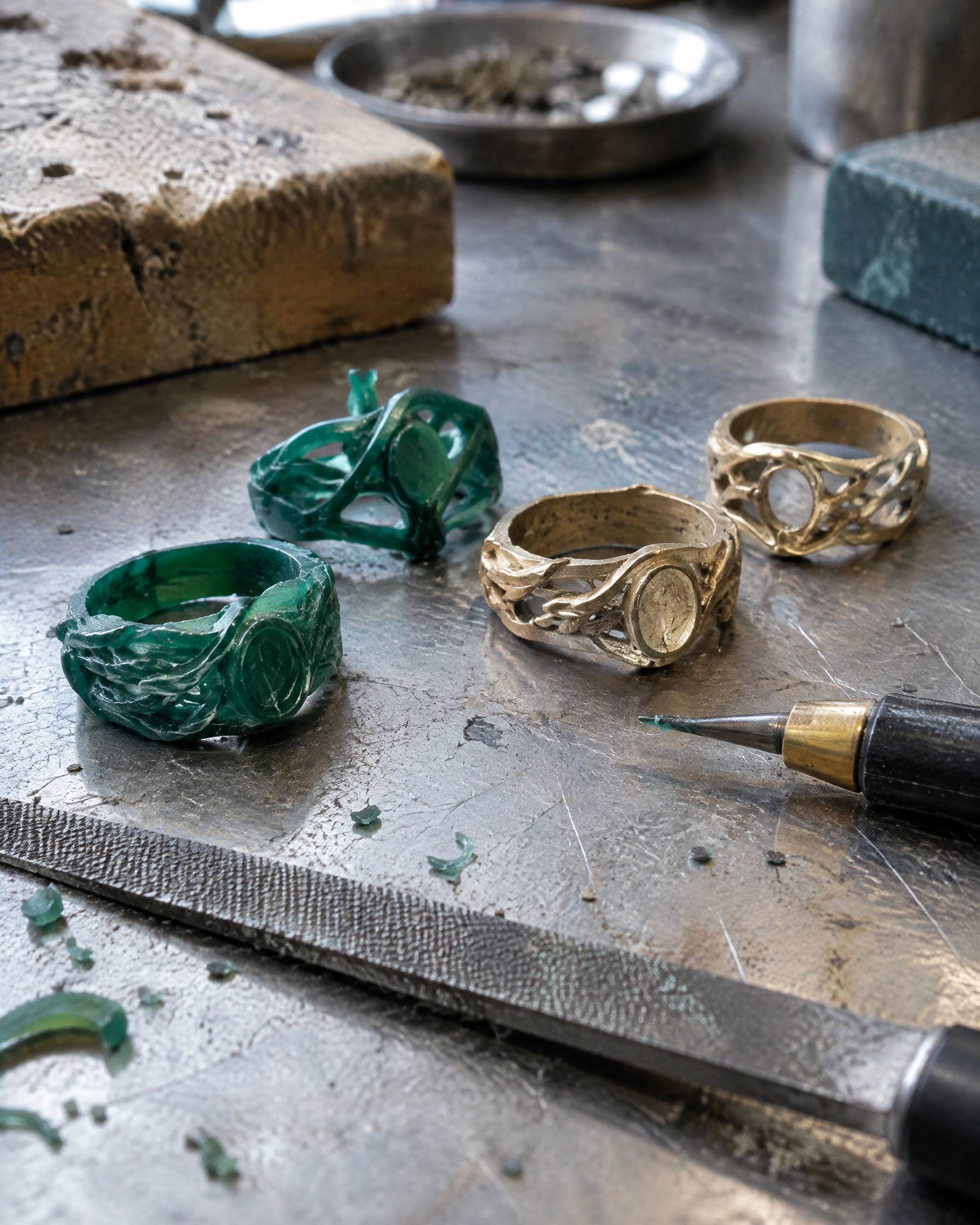
Depending on the piece, the model is hand-carved in wax, printed from a 3D file, or the piece is fabricated directly from wire and sheet.
-
First prototype
The model becomes a brass prototype, raw or plated. You receive photos and measurements first, then the physical sample.
-
Revisions
You mark up what needs to change. Each revision is documented, so the reasons behind the final piece stay clear.
-
Approved sample
The sample you sign off becomes the production reference, together with its written specification.
What helps us develop the right piece
A useful brief does not have to be long. These are the points that most often change the result:
- Target retail price, or the cost you need to reach — it shapes weight, construction and plating.
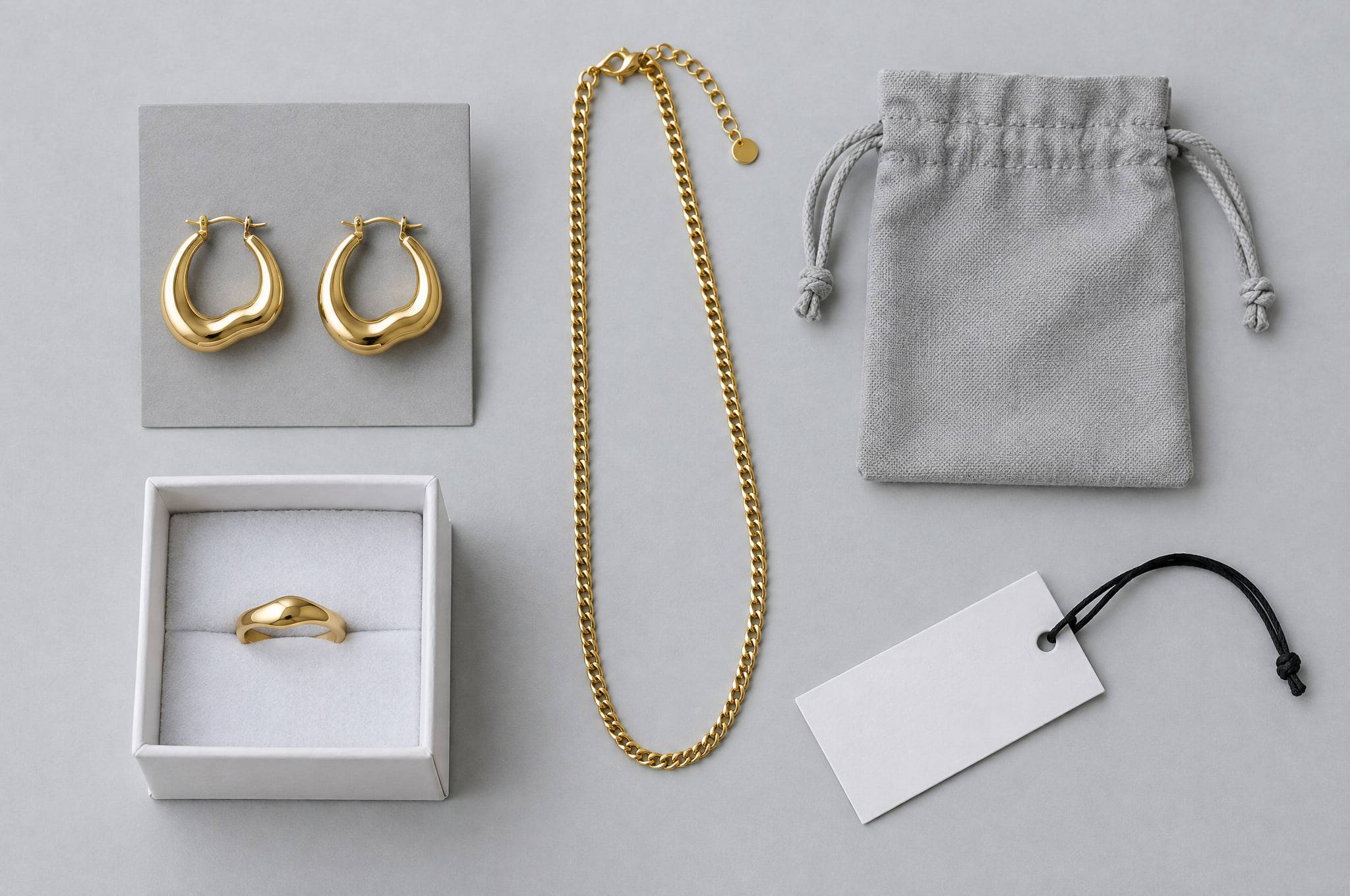
- Size and how the piece is worn — ring sizes, chain lengths, earring drop, closure type.
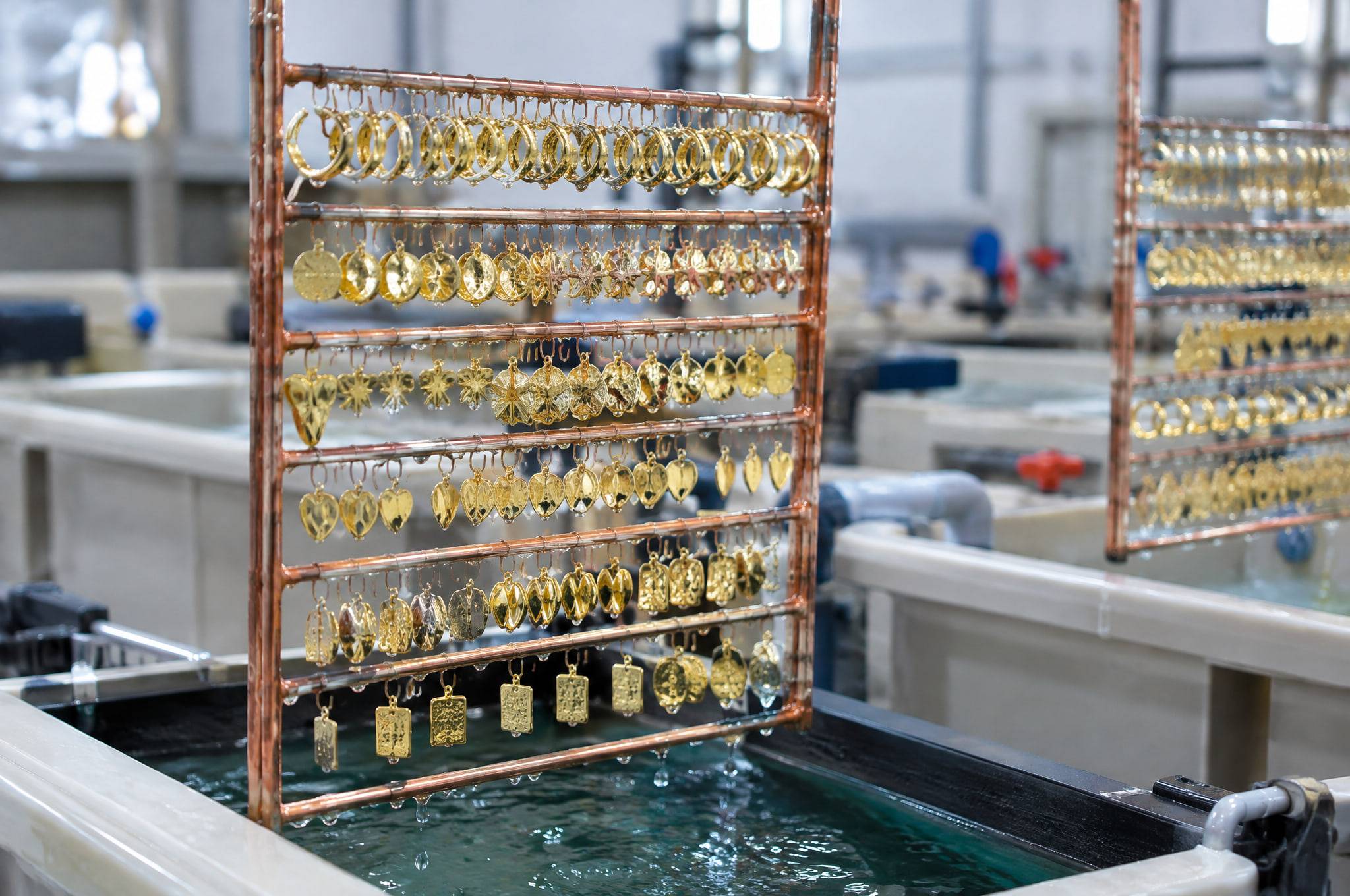
- Finish — raw brass for your own plating, or gold-plated in Jaipur, and the look you are after.
- References — photos of pieces, textures or objects that show what you mean.
- Market requirements — for example limits on nickel or lead in your market.
- Timing — when you need samples, and when you would like the collection in stock.
Questions brands ask
Do I need technical drawings to start?
No. Sketches, photos of references and a short description of what you want are enough to start. Turning them into a technical specification is part of the development work.
How much does development cost?
It depends on the number of pieces and their complexity. Development and sample costs are quoted before any work starts, so there are no surprises.
Can you develop a whole capsule rather than single pieces?
Yes. Developing pieces together helps keep proportions, components and finish consistent across the range — shared clasps or links, for example, and a single plating specification.
Am I committed to production after the prototypes?
No. Development and production are quoted separately. You decide on production once you have approved samples in hand — often a first run of 30 to 100 pieces per design.
Keep exploring
Tell us about your collection
A few sketches, photos of pieces you love, or a technical file — whatever you have is enough to start. First collections are welcome; you do not need a final budget to ask.
You can send sketches, reference photos, CAD files, a quantity per design and a finish.