How gold-plated brass jewelry is made
From the first model to the gold bath: the six stages behind every cast brass piece, explained the way a workshop would — with what you can specify at each step.
-
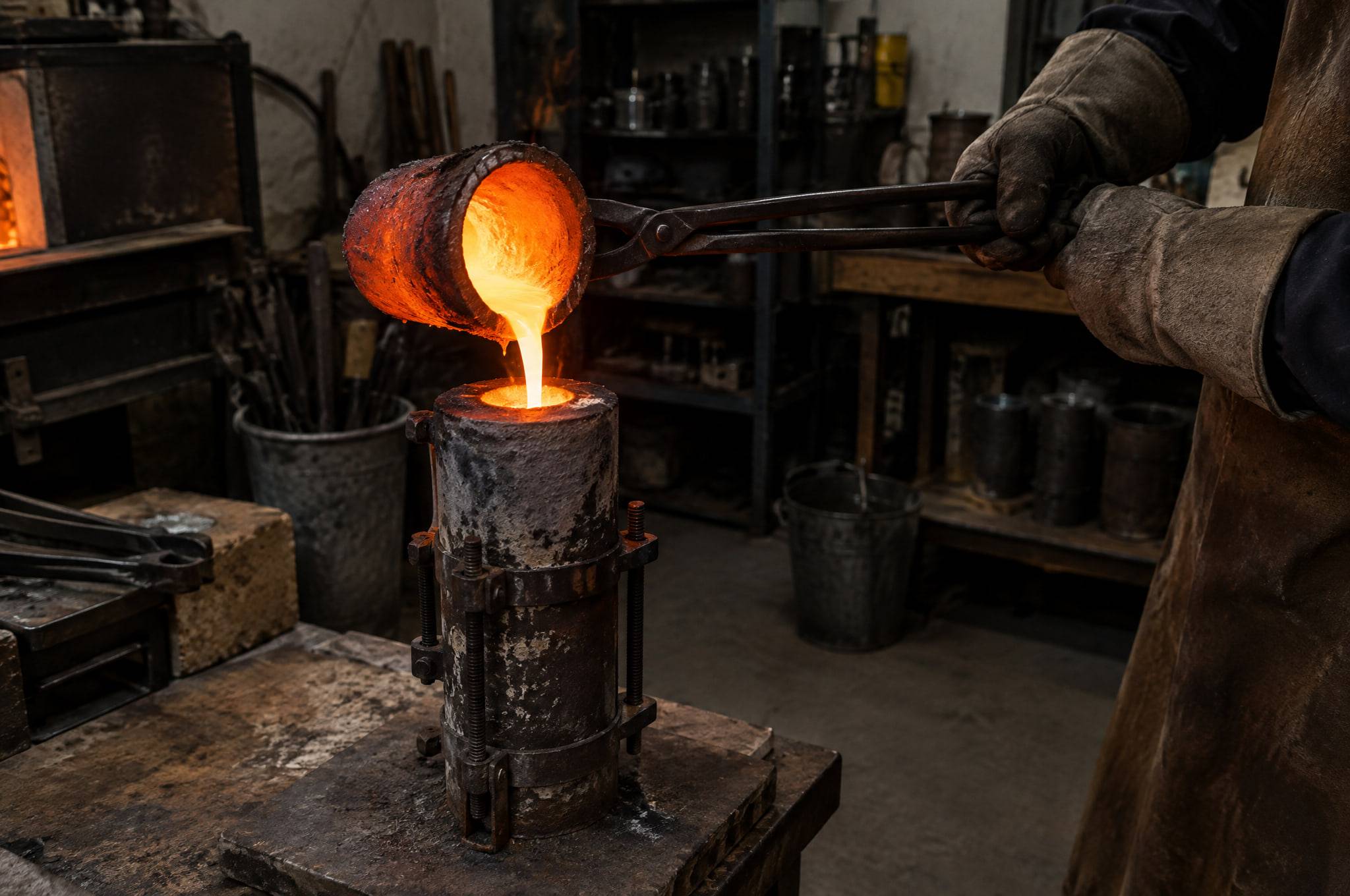
Casting molten brass
-
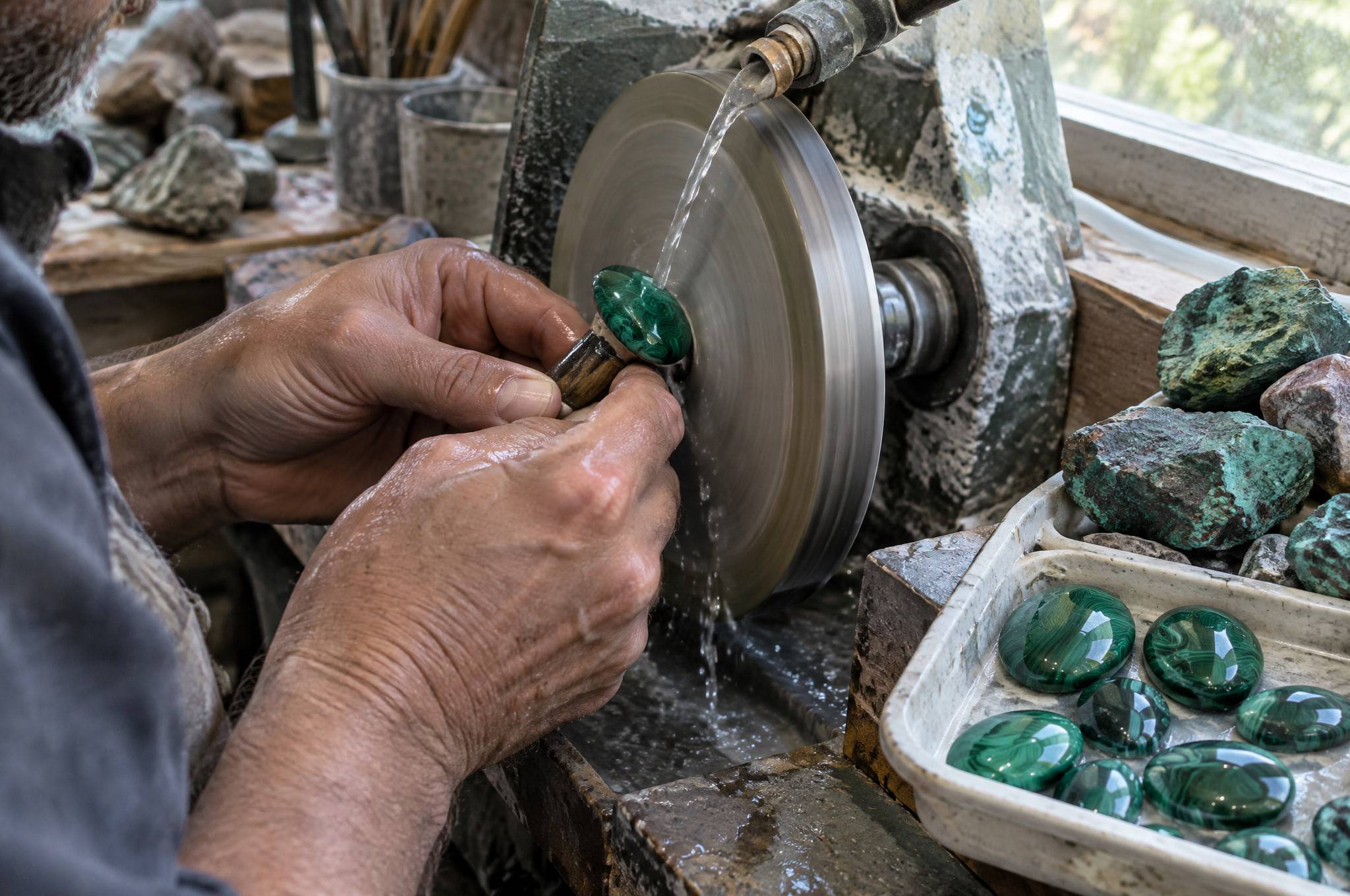
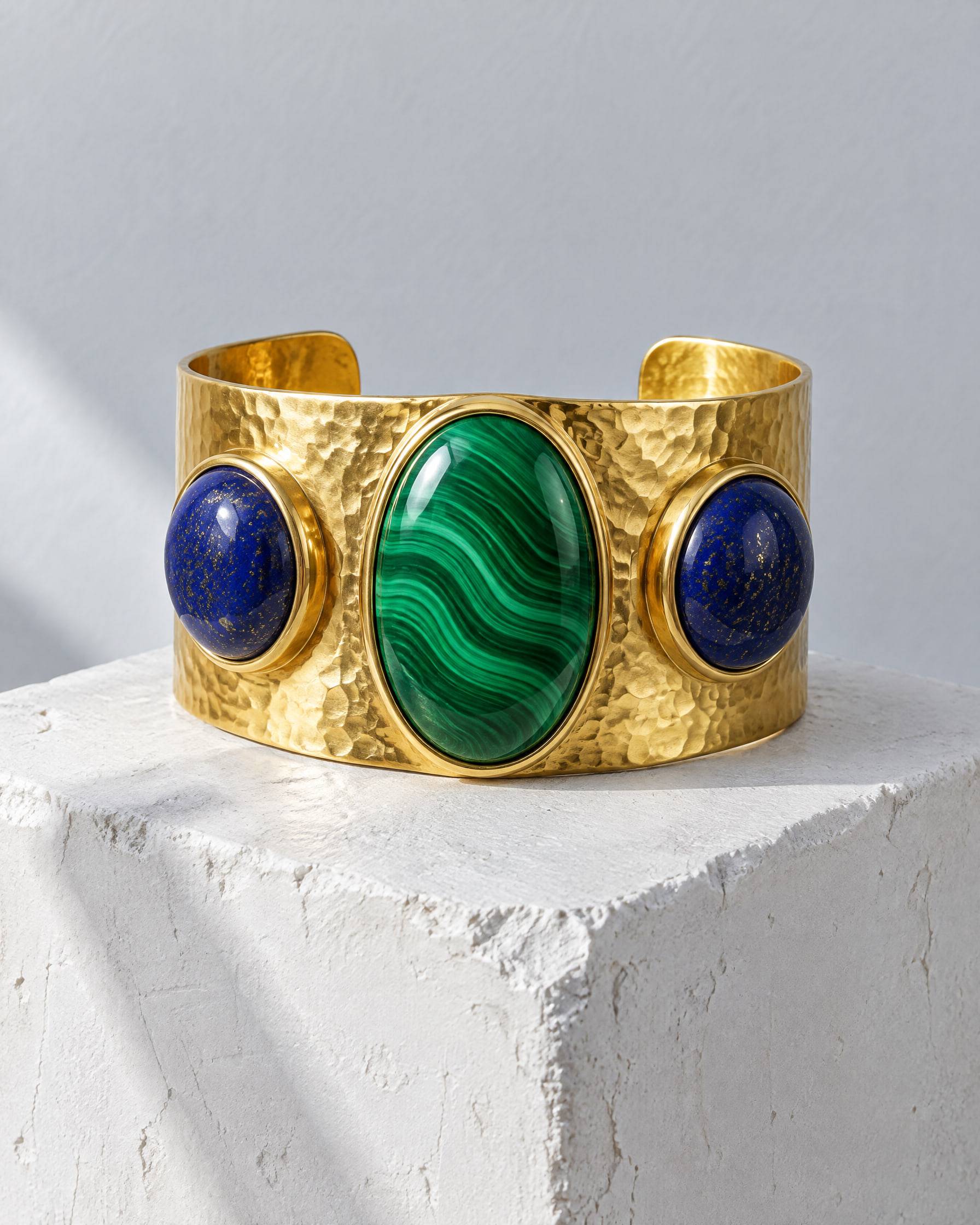
Stone cutting malachite cabochon
-
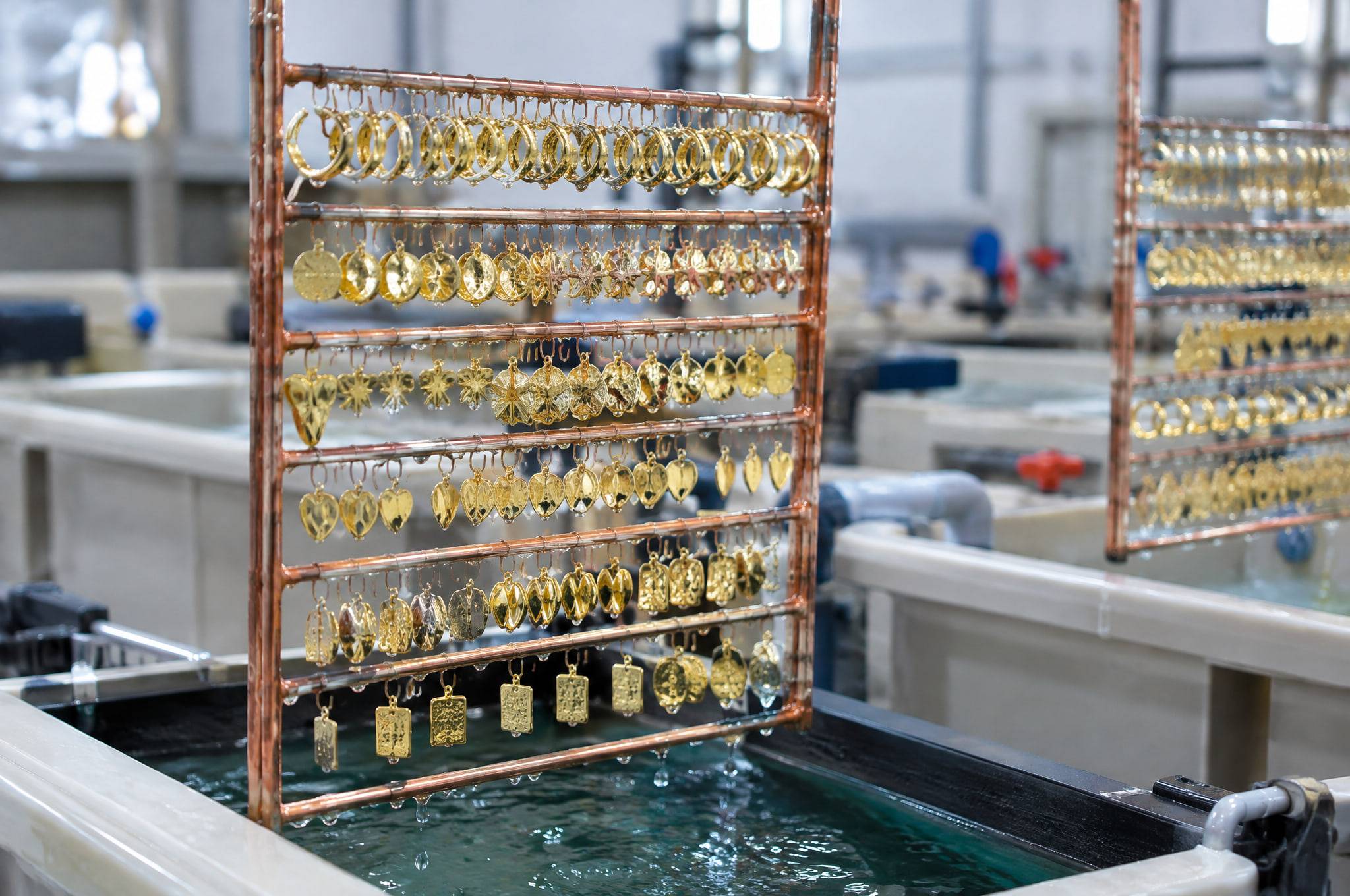
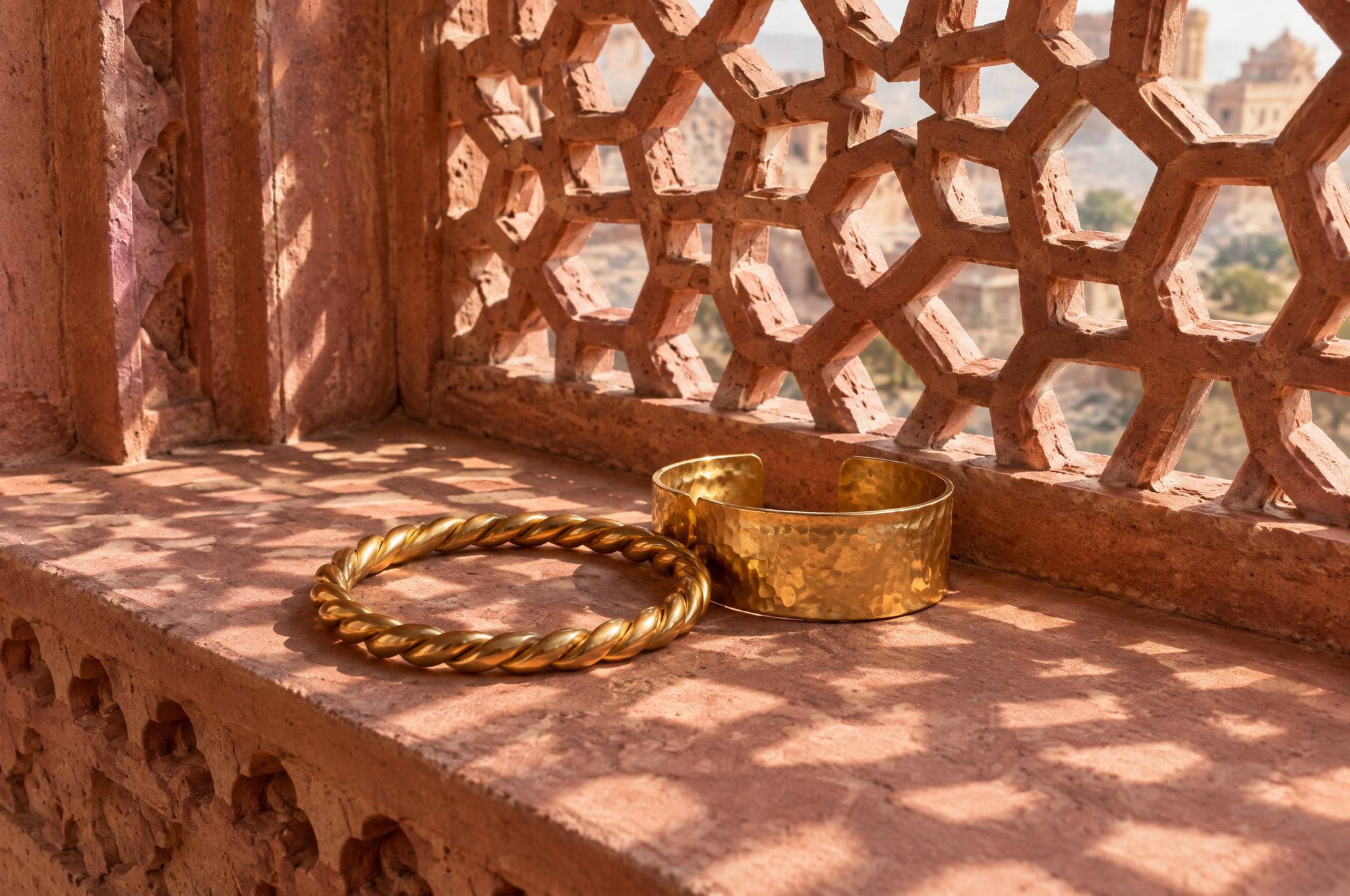
Plating gold bath
Concept visuals, not client work.
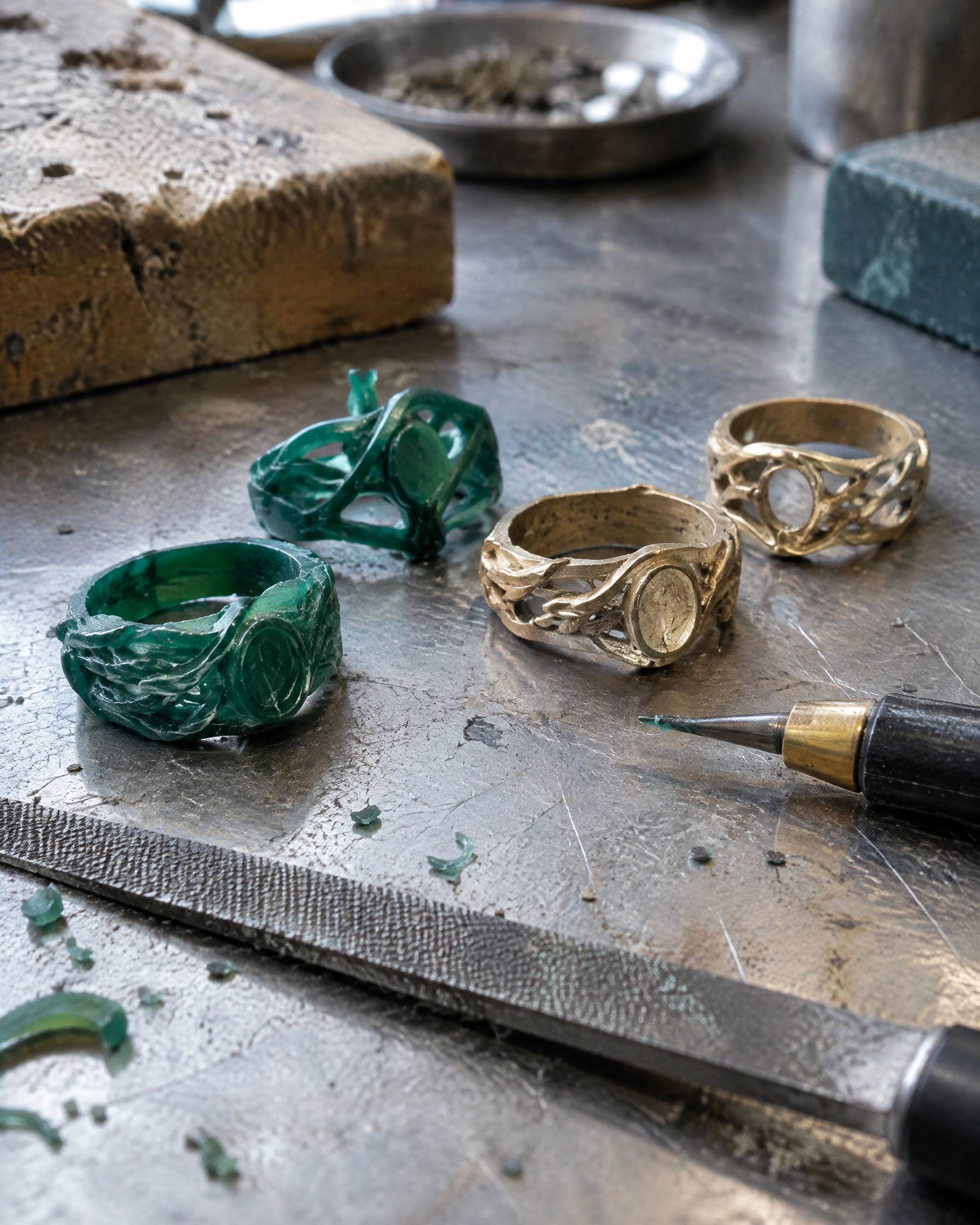
Stage 01
The master model
Every cast piece starts as a single master: carved by hand in jewelry wax, or printed in resin from a 3D (CAD) file. Its proportions, thickness and details decide everything that follows, so it is checked against your drawing before anything is cast.
- Hand-carved wax or 3D-printed resin
- Allowance for metal shrinkage and finishing
- Checked against your measurements
Stage 02
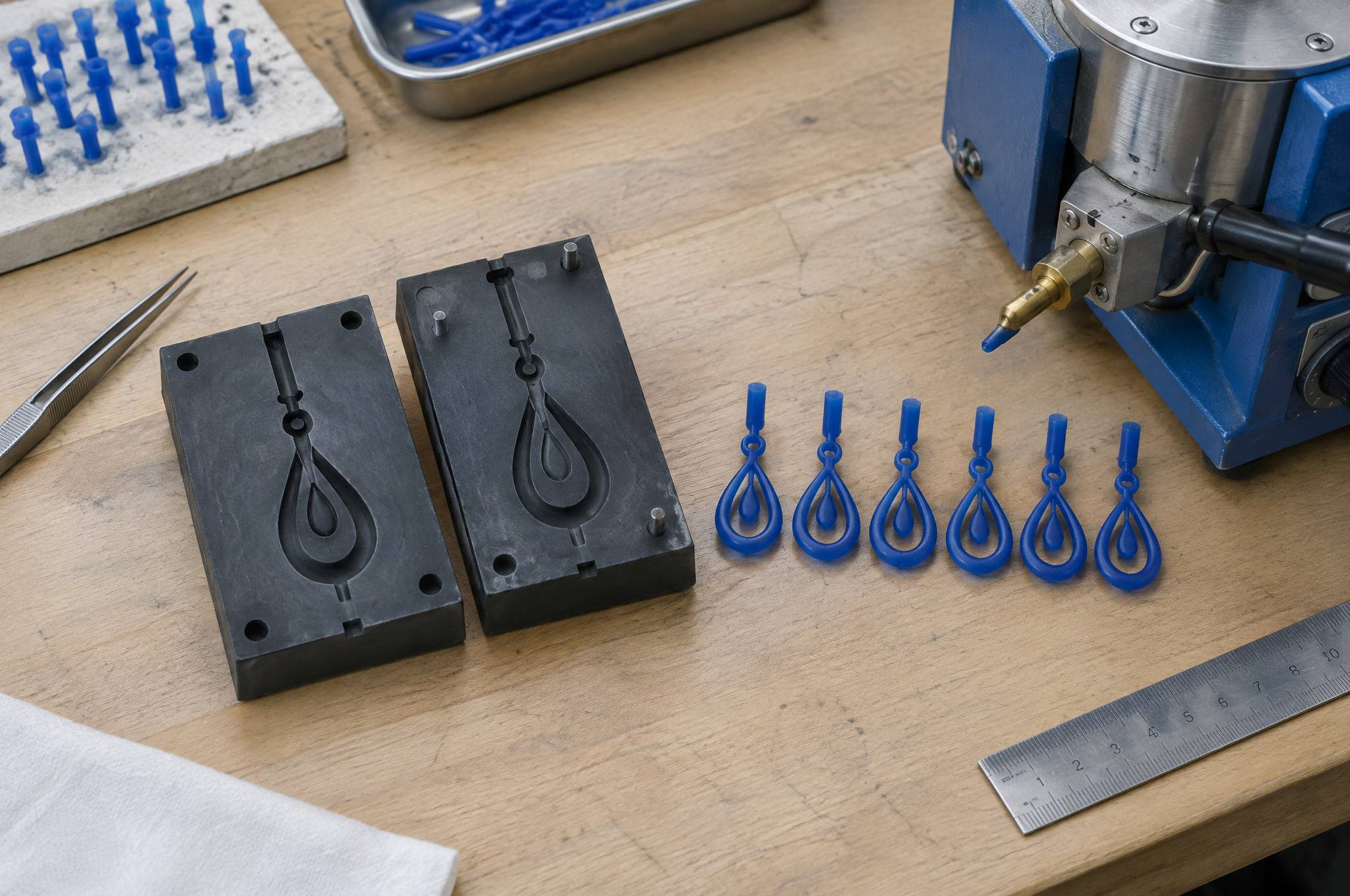
Rubber molds and wax copies
Once the first metal master is approved, it is pressed into rubber and vulcanized to make a production mold. Molten wax is injected into that mold to make as many identical wax copies as the run needs.
- One mold per design — the reason small runs stay affordable
- Identical wax copies for each piece of the run
- The mold can be kept for reorders
Stage 03
Lost-wax casting
The wax copies are attached to a central wax stem to form a tree, set in a steel flask and covered with investment plaster. The flask is heated: the wax burns out and leaves a cavity in the exact shape of each piece. Molten brass is poured in, the plaster is broken away, and a brass tree of pieces remains.
- Also called investment casting
- Brass is a copper–zinc alloy; composition can be specified
- Each piece is cut from the tree by hand
Stage 04
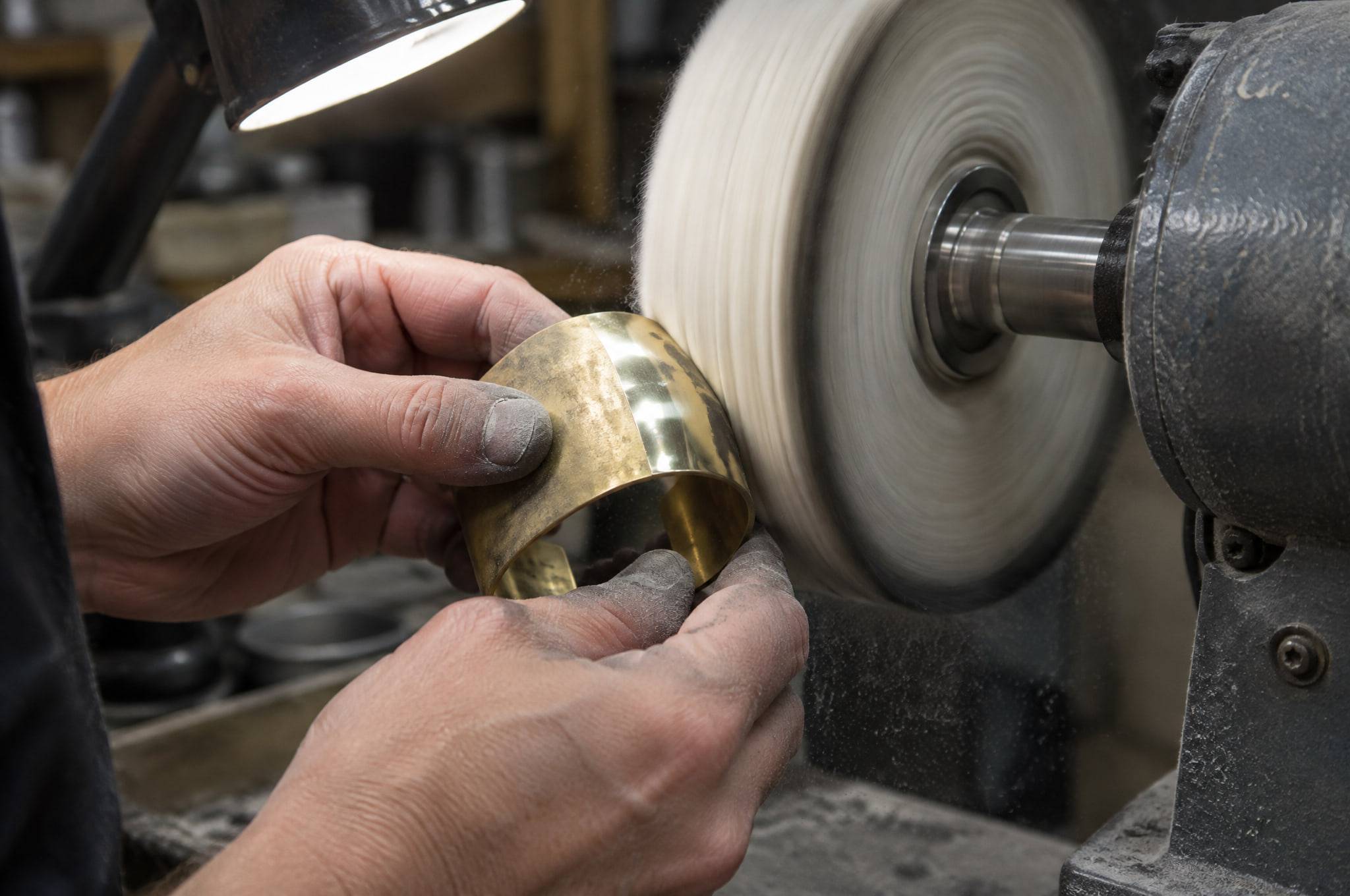
Clean-up and finishing
Sprue marks are filed away, then each piece is tumbled, polished, brushed or hammered to the surface that was agreed. Findings, posts and jump rings are soldered on. The surface finish is set now: plating copies it, it does not hide it.
- High polish, satin, brushed, hammered or textured
- Soldering of findings and closures
- Surface ready for plating — or shipped raw
Stage 05
Stone cutting and setting
Semi-precious stones are sawn from rough, shaped on wet grinding wheels and polished into cabochons — or cut with facets for crystal and transparent stones. Jaipur has cut colored stones for centuries. Stones are then matched for color and size and set in bezels or prongs made for them.
- Cabochon: a smooth domed stone, ideal for opaque stones
- Faceted: flat polished faces that catch light
- Bezel or prong setting, before or after plating depending on the stone
Stage 06
Gold electroplating
Pieces are hung on racks and passed through a sequence of baths: cleaning (often ultrasonic), electro-cleaning, rinsing and acid activation, then the gold bath, where an electric current deposits a layer of gold on the brass. Thickness depends on current and time; tone depends on the gold solution.
- Thickness is specified in microns — for example 1, 2 or 3 µm — and confirmed per piece
- An underlayer and nickel-free processes can be specified for your market
- Optional protective lacquer against tarnish
Quality checks, before anything ships
The approved sample is the reference. Production pieces are checked against it: dimensions and weight, surface finish, plating tone, stone color and matching, closures and findings. What is checked, and how, is written into your specification — see our process in six written steps.
Comparing production bases? Read jewelry manufacturing in China vs India.
Questions about techniques
What is lost-wax casting?
A method where a wax copy of the piece is encased in plaster, melted out, and replaced by molten metal. It reproduces fine detail and is the usual route for rings, pendants and sculpted shapes in brass.
How thick is gold plating on brass jewelry?
Thickness is measured in microns. Flash plating is a very thin layer; fashion jewelry built to last is often plated at 1 to 3 microns. The achievable thickness is confirmed with the workshop for each piece and written into the quotation.
Is gold-plated brass the same as gold vermeil?
No. Vermeil designates sterling silver plated with gold; gold-plated brass uses brass as the base metal. Use the right term on your labels and product pages.
Can gold-plated brass be nickel-free?
A nickel-free plating sequence can be specified. Tell us which requirements apply in your market — for example EU limits on nickel release — and we confirm with the workshop what can be specified and documented before production.
What is the difference between a cabochon and a faceted stone?
A cabochon is shaped and polished into a smooth dome, which suits opaque or banded stones such as malachite, lapis lazuli or onyx. A faceted stone is cut with flat polished faces that reflect light, which suits transparent stones such as rock crystal or amethyst.
Keep exploring
Have a collection in mind?
Tell us the categories, the number of designs and the finish you imagine. We tell you which techniques suit each piece, and what they cost.
You can send sketches, reference photos, CAD files, a quantity per design and a finish.