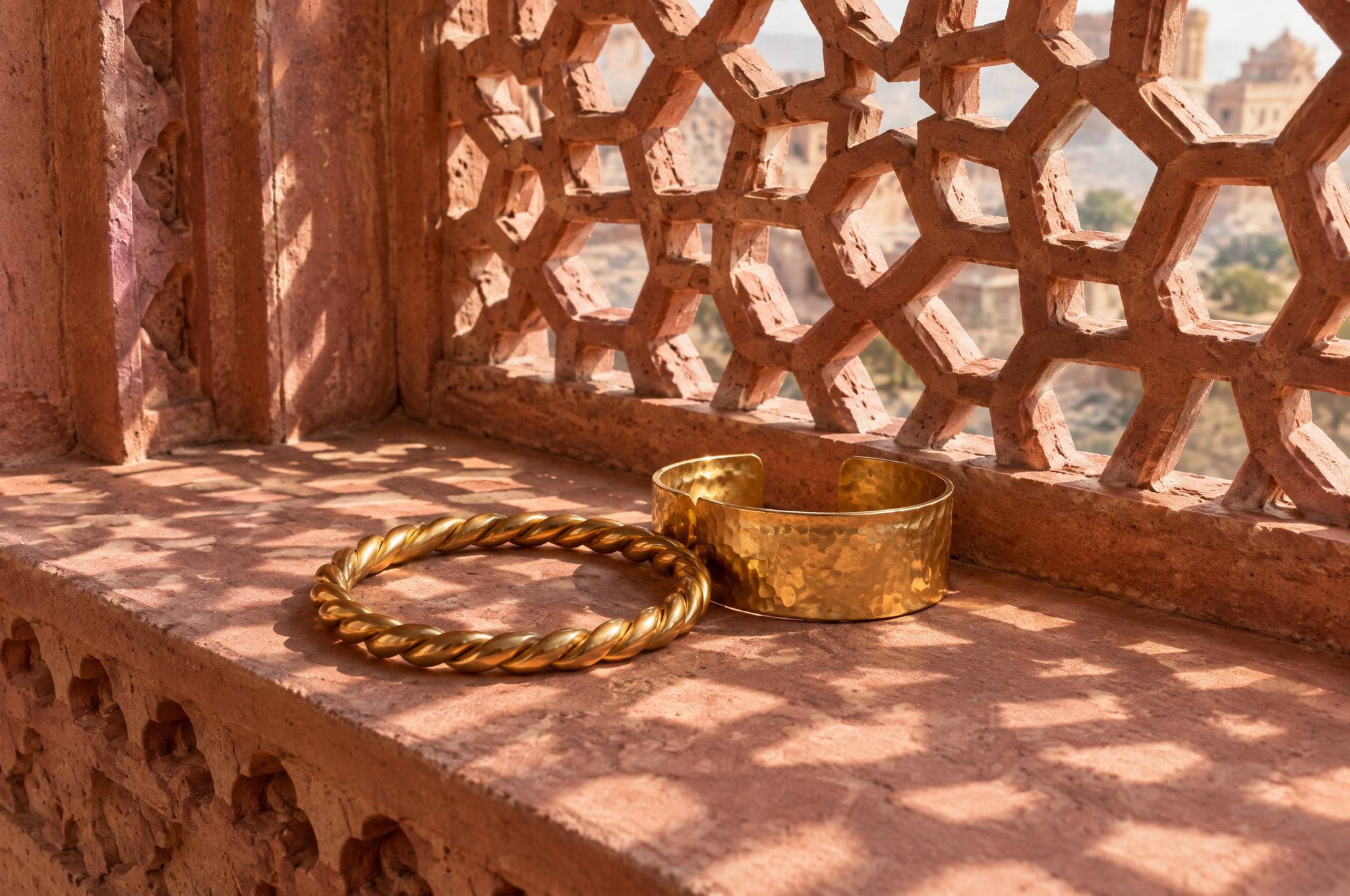
Gold-plated brass jewelry, finished in Jaipur
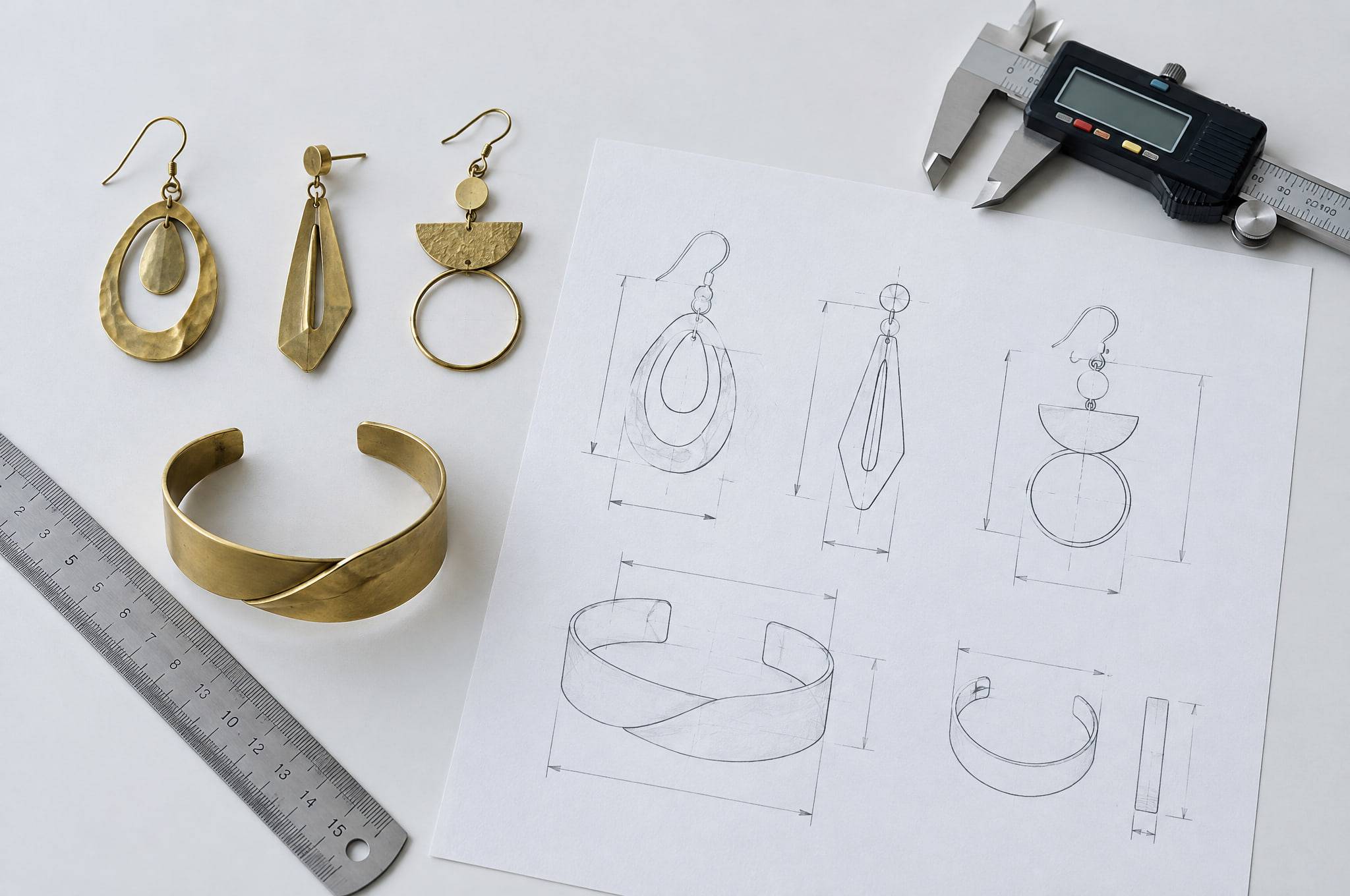
Brass jewelry produced and gold-plated to a specification agreed before production — gold tone, thickness and finish written down, sampled and approved by you. Delivered ready to sell.
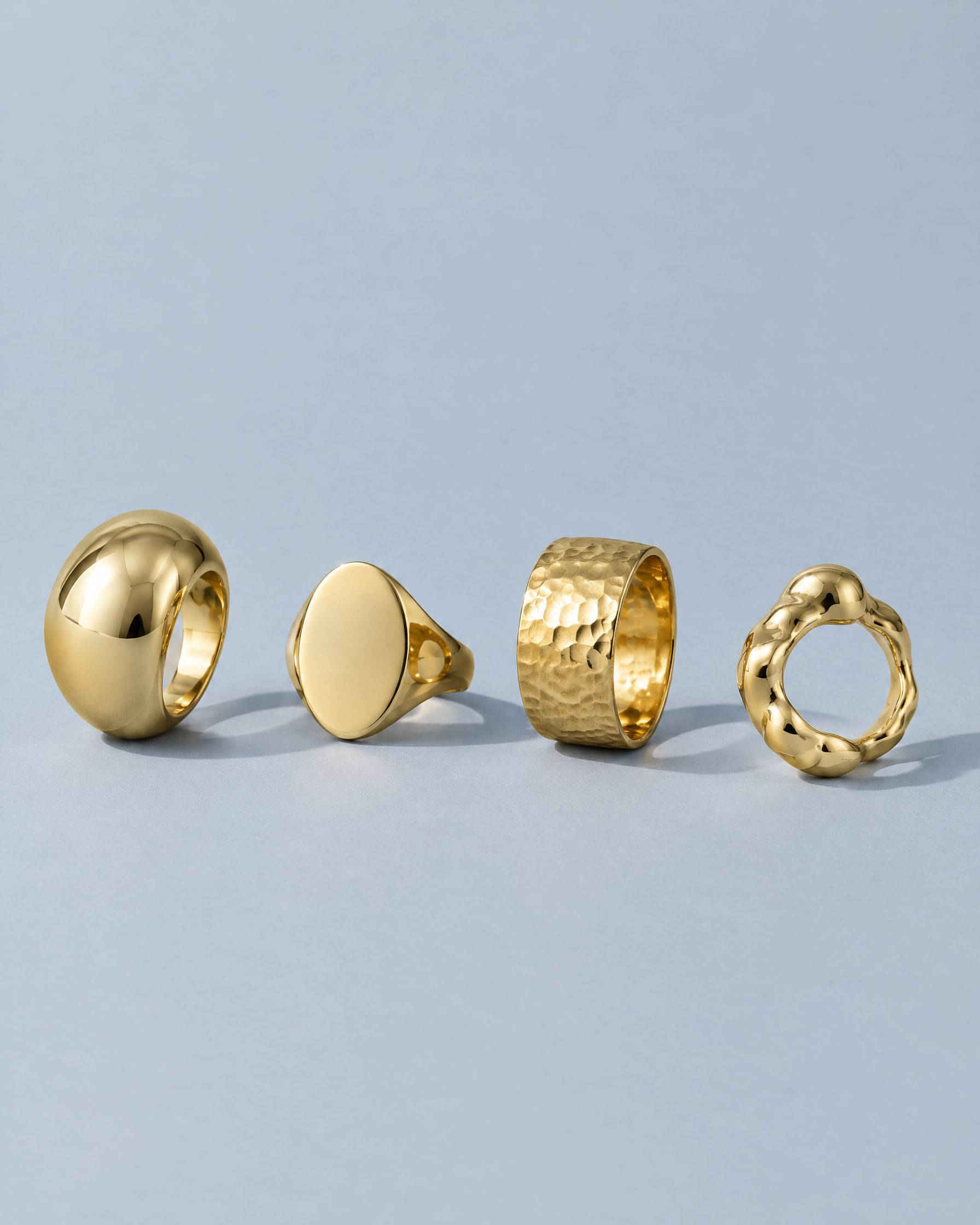
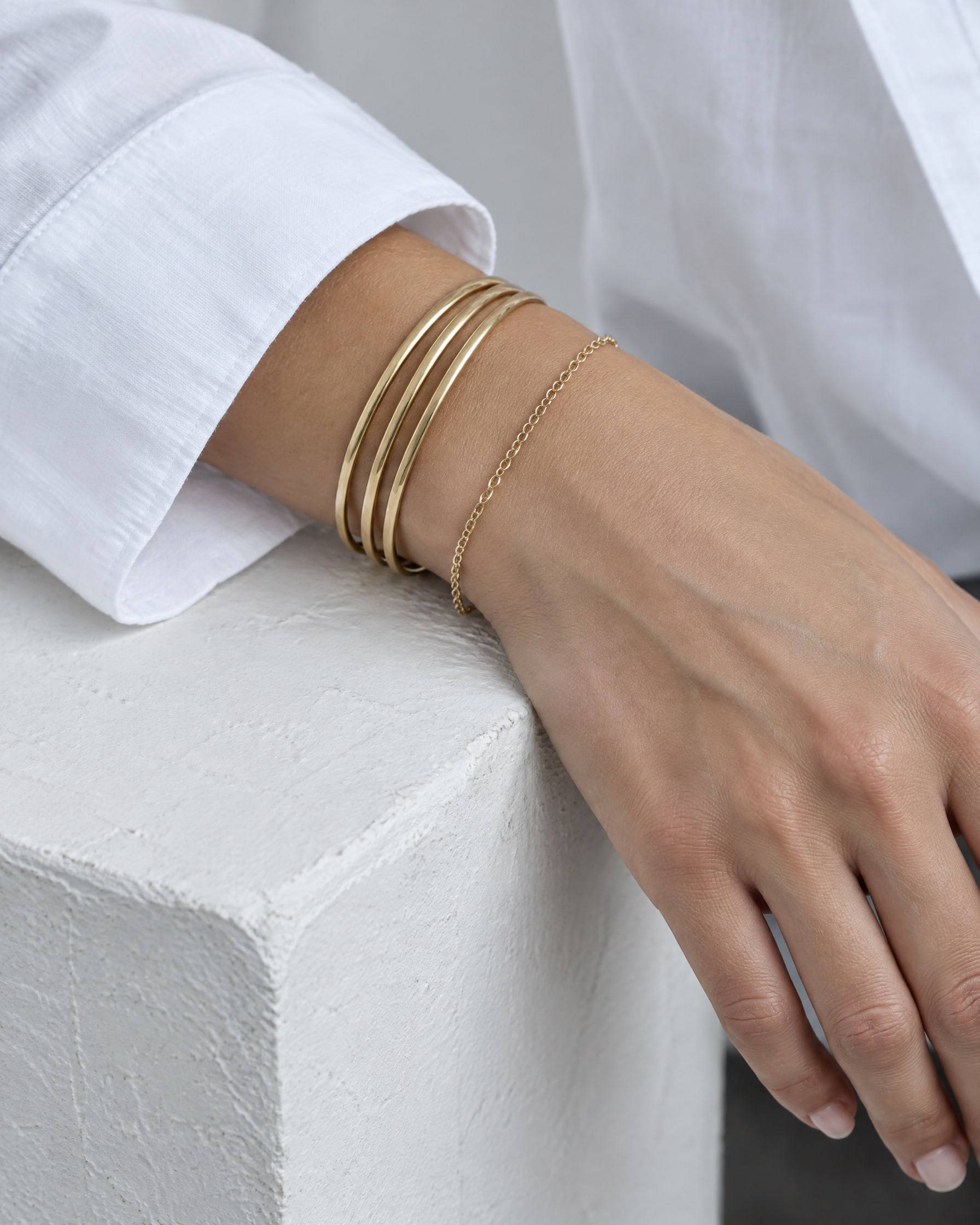
Finished pieces, ready for your shelves
This route is for brands that want to receive finished jewelry: cast or fabricated in brass, plated, checked and packed as agreed. It suits brands without their own plating partner, collections that need one consistent gold tone across many pieces, and orders where finishing in a second country would add cost and time.
Plating is part of the manufacturing process in Jaipur, not an afterthought. The plated prototype you approve is the reference the production run is checked against.
Six things we write down before production
“Gold-plated” on its own says very little. A usable specification covers at least these points. Thickness figures are examples of what brands ask for — the specification for your piece is confirmed with the workshop, then stated in the quote.
- Gold color
- The gold tone you want, matched to a physical reference or to an existing piece from your range.
- Thickness
- Stated in microns. Brands often ask for 1, 2 or 3 µm; what is achievable for your piece is confirmed with the workshop before it is written into the quote.
- Surface finish
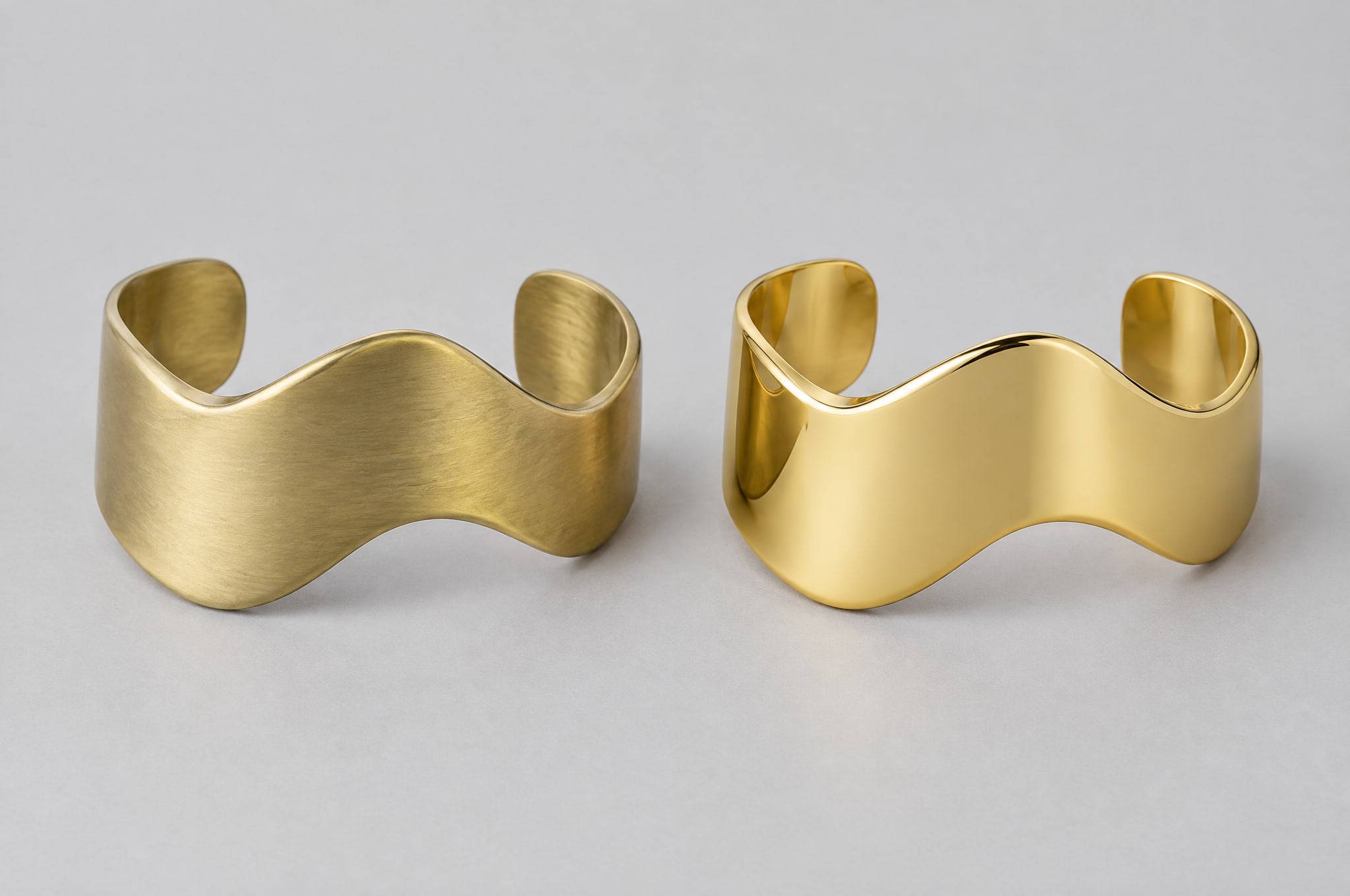
- Polished, satin or textured under the plating, which changes how the gold reads.
- Protective coating
- Whether you want a clear protective layer over the plating — confirmed with the workshop for your piece.
- Coverage
- Which surfaces must be fully covered — inside of rings and backs of pendants included or not.
- Verification
- How the specification is checked on the approved sample and on production. If you need thickness measurement or third-party testing, say so: we confirm what can be provided and at what cost.
From brief to plated production
- Brief and specification. Your design, plus the plating points above — as far as you know them. We help fill the gaps.
- Quotation. Feasibility, price per piece, quantities and timing for your design and plating specification.
- Plated prototype. A sample is cast or fabricated, finished and plated, then sent to you.
- Approval. You confirm color, finish and construction, or request changes. The approved sample becomes the reference.
- Production and checks. Your run is produced, plated and checked against the reference before packing.
- Shipping. Pieces are packed as agreed and shipped to you.
Questions brands ask
What does "1, 2 or 3 microns" mean in practice?
It is the thickness of the gold layer deposited on the brass. A thicker layer generally withstands wear for longer, but durability also depends on where the piece rubs, how it is worn and how it is cared for. We do not promise a lifetime; we agree a measurable specification and check it on the approved sample.
Is gold-plated brass the same as vermeil?
No. Vermeil refers to gold over sterling silver, not over brass. Gold-plated brass should be described as gold-plated brass. We give you the actual specification of your pieces so that you can label and describe them correctly in your market.
Can you match the gold color of my existing products?
Send a reference piece or a clear photo with a color reference. The prototype is plated to match, and the approved sample becomes the color reference for production. Plating colors can vary slightly between batches, which is why the physical reference matters.
Can I see the plated result before ordering production?
Yes. A plated prototype is made and sent to you before any production commitment. See how prototypes and approvals work.
Keep exploring
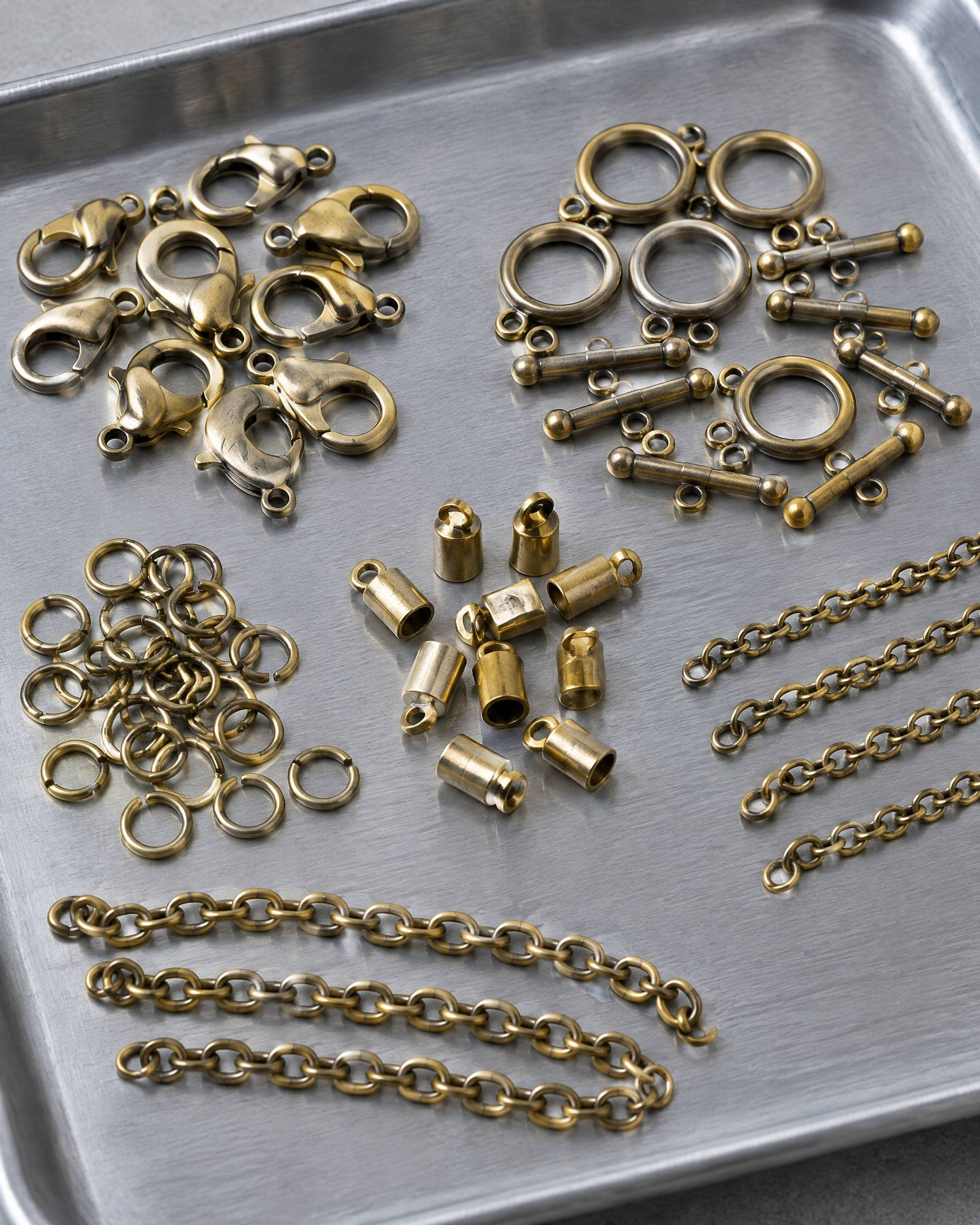
Quote a gold-plated collection
A few sketches, photos of pieces you love, or a technical file — whatever you have is enough to start. First collections are welcome; you do not need a final budget to ask.
You can send sketches, reference photos, CAD files, a quantity per design and a finish.